Introduction
The world of mobile communication is evolving at a very fast pace, and every new generation of network technology brings major improvements in speed, connectivity, and user experience. Over the past decade, we have seen a huge transformation from 3G to 4G, and now 5G is already reshaping the digital world. However, the future does not stop here. The next big revolution in wireless communication is 6G technology, which is expected to completely change how humans, machines, and digital systems interact with each other. While 5G is already powerful and widely used in many countries, 6G will take mobile communication to a level that currently feels like science fiction.
What is 5G Technology?
5G stands for the fifth generation of mobile network technology. It is designed to deliver ultra-fast internet speeds, extremely low latency, and highly reliable connections. Compared to 4G, 5G is many times faster and more efficient. It allows users to download large files in seconds, stream ultra-high-definition videos without buffering, and play online games with almost no delay. Another important feature of 5G is its ability to connect a massive number of devices at the same time, which is essential for the growth of smart cities, IoT (Internet of Things), and modern digital ecosystems.
How 5G is Changing the World
5G technology is already having a strong impact on multiple industries. In healthcare, doctors can now perform remote consultations, monitor patients in real time, and even assist in surgeries using robotic systems connected through high-speed networks. In education, students can attend virtual classes with high-quality video and interactive tools. In entertainment, users can enjoy cloud gaming, 4K and 8K streaming, and immersive VR experiences without lag.
In transportation, 5G is helping develop autonomous vehicles that can communicate with each other and with traffic systems instantly. Smart cities are also becoming a reality, where traffic lights, surveillance systems, and public services are connected through intelligent networks powered by 5G. Overall, 5G is not just improving internet speed—it is transforming the entire digital lifestyle.
What is 6G Technology?
6G is the sixth generation of wireless communication technology that is currently under research and development. It is expected to be launched commercially around 2030. While 5G focuses on high-speed connectivity and low latency, 6G aims to go far beyond that by creating an intelligent, fully connected digital ecosystem.
6G will not only provide faster internet but will also integrate advanced technologies such as artificial intelligence, quantum computing, and edge networks. It will enable communication that is almost instant, with near-zero latency, making real-time global interaction possible without any noticeable delay.
Key Features of 6G Technology
One of the most exciting features of 6G is its speed. It is expected to be up to 100 times faster than 5G, with data transfer speeds reaching terabits per second. This means that downloading entire movies or large datasets will take only a fraction of a second.
Another important feature is ultra-low latency. With 6G, communication will become almost instantaneous, which is critical for advanced applications like remote surgeries, autonomous systems, and real-time simulations. 6G will also support massive connectivity, potentially linking trillions of devices, sensors, and smart systems together in a single network.
Artificial intelligence will play a major role in 6G networks. Unlike 5G, where networks are still manually managed, 6G will use AI to automatically optimize performance, manage traffic, detect threats, and improve efficiency without human intervention. This will make the network smarter, faster, and more secure.
5G vs 6G: Major Differences
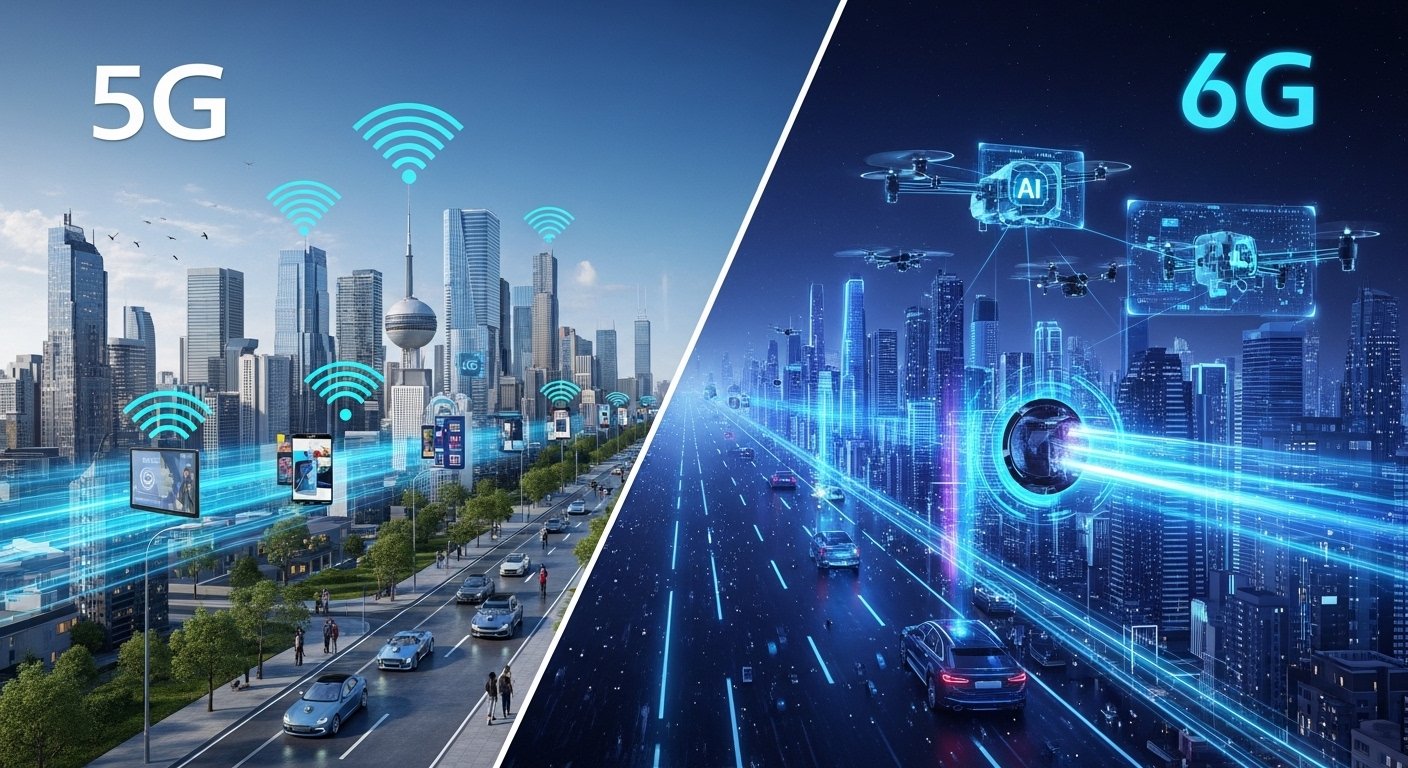
The difference between 5G and 6G is not just about speed; it is about intelligence and capability. 5G is mainly focused on improving mobile internet and connecting billions of devices. It supports technologies like IoT, smart homes, and autonomous vehicles.
On the other hand, 6G is designed to create a fully digital and intelligent world. It will connect not just billions but trillions of devices, including sensors, robots, drones, and entire smart environments. While 5G enhances current technology, 6G will merge the physical and digital worlds together through advanced systems like holographic communication and digital twins.
https://play1.11winners.pro/5g-vs-6g-technology-whats-next-the-evolution/
Future Applications of 6G Technology
6G will unlock many futuristic applications that are not fully possible with current technology. One of the most exciting possibilities is holographic communication, where people will be able to interact with 3D holograms in real time during meetings, education, and entertainment.
Another major innovation will be digital twins of cities and systems. This means that entire cities can be replicated in a virtual environment, allowing planners to test traffic systems, weather conditions, and infrastructure changes before implementing them in real life.
6G will also enhance virtual reality (VR) and augmented reality (AR) experiences, making them more realistic and immersive. Remote healthcare, space communication, smart robotics, and AI-driven automation will also become more advanced and widely used.
Challenges in Developing 6G
Despite its huge potential, 6G technology faces several challenges. One of the biggest challenges is infrastructure development, as building such an advanced network will require massive investment and global cooperation. Another challenge is energy consumption, as high-speed networks require efficient power management to remain sustainable.
Security is also a major concern. As networks become more advanced and interconnected, protecting data and preventing cyberattacks will become more complex. Additionally, global standards for 6G are still being developed, and it may take years before full worldwide adoption becomes possible.
The Future of Mobile Networks
The evolution from 4G to 5G has already changed the way we live, work, and communicate. However, the transition from 5G to 6G will be even more revolutionary. Future mobile networks will not just provide internet access—they will create a fully connected intelligent environment where humans and machines interact seamlessly.
In the coming years, we can expect smarter cities, advanced AI systems, real-time global communication, and immersive digital experiences that will redefine industries like healthcare, education, transportation, and entertainment.
Conclusion
In conclusion, 5G is already transforming the digital world by providing faster and more reliable communication, while 6G is expected to take this transformation to an entirely new level. With ultra-fast speeds, AI-powered networks, holographic communication, and massive connectivity, 6G will redefine the future of mobile technology. Although it is still in development, its impact will be groundbreaking, shaping a world where digital and physical realities merge seamlessly.