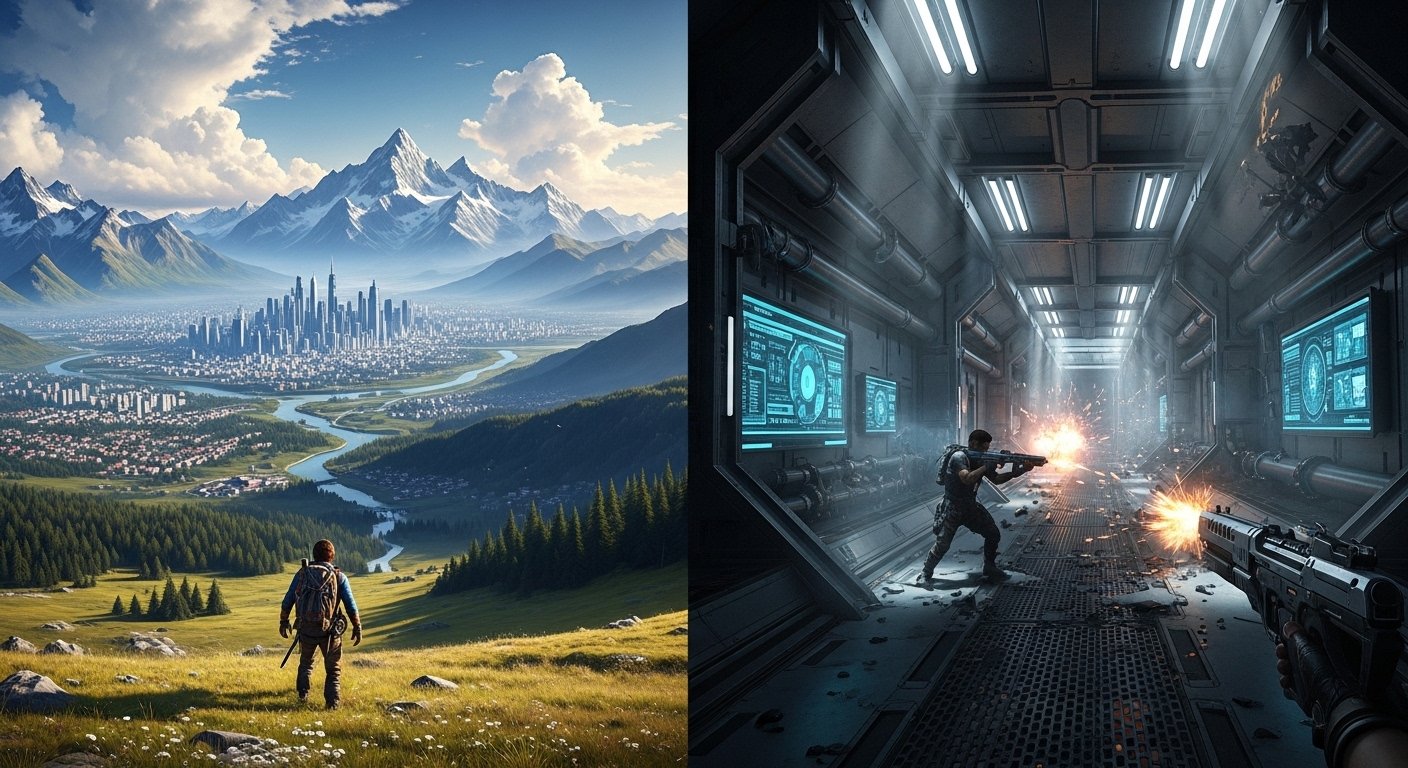
The video game industry has grown into one of the largest entertainment industries in the world. With advancements in technology, graphics, and storytelling, developers now have many ways to design gameplay experiences. Two of the most popular design styles are open world games and linear games. Each style offers a different way for players to experience stories, explore environments, and interact with gameplay systems.
In recent years, the debate between open world and linear games has become increasingly popular among gamers. Some players prefer the freedom and exploration offered by open world games, while others enjoy the focused storytelling and structured gameplay of linear titles. Understanding the strengths and weaknesses of both styles can help explain why different players prefer different types of gaming experiences.
What Are Open World Games?
Open world games allow players to explore a large virtual environment freely. Instead of following a strict path, players can travel across the game world, complete missions in different orders, and discover side activities along the way. These games often feature massive landscapes filled with quests, hidden locations, and dynamic events.
In an open world game, players usually have the freedom to approach objectives however they want. They may choose to follow the main storyline, explore side missions, or simply roam around the environment. This sense of freedom creates a highly immersive experience where players feel like they are living inside the game world.
Modern open world games often include features such as dynamic weather systems, day and night cycles, and interactive environments. These elements make the world feel more realistic and alive. According to gaming research, the main appeal of open world games is the sense of autonomy and exploration that allows players to create their own adventures.
However, open world games can also be extremely large and time-consuming. Some players may feel overwhelmed by the number of activities available in these games.
What Are Linear Games?
Linear games follow a structured path where players progress through levels or chapters in a fixed order. Unlike open world games, the player usually moves from one mission to another without the ability to freely explore the entire environment.
In a linear game, developers carefully design each level to guide the player through a specific narrative experience. The story unfolds in a controlled way, allowing developers to create cinematic moments, emotional scenes, and carefully paced gameplay.
Because the game follows a defined structure, developers can focus more on storytelling, character development, and dramatic moments. Linear games often deliver powerful narratives because every scene and mission is carefully planned.
Examples of linear gameplay can be found in many story-driven action games and first-person shooters where the player moves from point A to point B through a guided path.
While some players appreciate this focused experience, others may feel that linear games limit their freedom and creativity.
The Appeal of Open World Games
One of the biggest reasons players enjoy open world games is the freedom they offer. Instead of following a strict mission structure, players can explore the environment at their own pace.
Open world games encourage curiosity and experimentation. Players can discover hidden locations, interact with non-playable characters, and uncover secrets scattered across the map. This exploration makes the gameplay feel dynamic and unpredictable.
Another major advantage of open world games is replay value. Because players can approach missions in different ways, each playthrough can feel unique. Some players may choose stealth strategies, while others prefer direct combat.
Open world environments also create opportunities for emergent gameplay. This means unexpected events can occur based on player actions, making every experience slightly different.
The Strength of Linear Games
Despite the popularity of open world games, linear games still remain highly successful. One of their biggest strengths is storytelling. Linear games allow developers to guide the player through a carefully crafted narrative.
Because the player follows a fixed path, developers can control pacing, suspense, and emotional impact more effectively. This often leads to memorable moments and powerful storytelling experiences.
Linear games also tend to be more polished. Since developers focus on smaller environments and fewer gameplay systems, they can refine mechanics, visuals, and level design more thoroughly.
Another advantage of linear games is accessibility. Players who prefer shorter gaming sessions often appreciate games that provide a clear objective and progression system.
Player Preferences in Modern Gaming
When it comes to player preferences, there is no single answer. Some players strongly prefer open world experiences, while others enjoy structured storytelling. Research suggests that both exploration and narrative engagement are major motivations for gamers today.
Many modern gamers enjoy exploring large environments and discovering new areas. Open world games satisfy this desire by offering endless opportunities for exploration and side content.
However, other players prefer a focused experience that respects their time. Linear games provide a clear path, allowing players to enjoy a complete story without spending dozens of hours exploring side content.
Interestingly, many gamers enjoy both styles depending on their mood or available time.
The Rise of Hybrid Game Design
In recent years, many developers have started combining elements of both open world and linear game design. This hybrid approach allows players to enjoy the benefits of both styles.
For example, some games feature a large open environment but still guide players through a structured storyline. Others include open areas for exploration while maintaining a linear mission structure.
This balance allows developers to deliver strong narratives while still giving players freedom to explore.
Hybrid game design has become increasingly popular because it satisfies a wider range of player preferences.
Challenges of Both Game Styles
Both open world and linear games come with their own development challenges.
Open world games require massive development resources. Creating large environments filled with meaningful content is extremely time-consuming. If not designed carefully, these worlds can feel empty or repetitive.
Linear games face different challenges. Because they limit player freedom, developers must ensure that the story and gameplay remain engaging throughout the experience.
If the story is not strong enough, players may feel that the game lacks replay value.
The Future of Game Design
The future of gaming will likely continue blending elements of both open world and linear design. As technology improves, developers will create more immersive worlds while maintaining strong narrative structures.
Artificial intelligence and procedural generation may also play a role in shaping future game environments. These technologies can help create dynamic worlds that adapt to player behavior.
Ultimately, the goal of game design is to provide engaging experiences that keep players entertained.
https://www.makeuseof.com/linear-non-linear-video-game-differences/
Conclusion
The debate between open world games and linear games continues to shape the gaming industry. Open world games offer freedom, exploration, and endless possibilities, while linear games provide focused storytelling and carefully crafted gameplay.
Neither style is objectively better than the other. Instead, each design philosophy appeals to different types of players and gaming preferences.
As game development continues to evolve, the most successful titles will likely combine the best elements of both approaches. By blending exploration with storytelling, developers can create experiences that satisfy a wide range of players and redefine the future of interactive entertainment.
https://play1.11winners.pro/open-world-games-vs-linear-games/