Introduction
In today’s digital world, security has become one of the most important concerns for individuals, businesses, and governments. Traditional passwords are no longer considered fully safe because they can be stolen, hacked, or forgotten. As cyber threats continue to increase, a new and more advanced solution is gaining popularity—biometric authentication. This technology is shaping the future of password-free security systems by using unique human characteristics such as fingerprints, facial recognition, and iris scans to verify identity.
What is Biometric Authentication?
Biometric authentication is a security process that uses biological traits to identify and verify a person’s identity. Unlike passwords or PIN codes, biometric systems rely on features that are unique to every individual. These features can include fingerprints, facial patterns, voice recognition, retina scans, and even behavioral patterns like typing speed or walking style.
Because these traits are extremely difficult to copy or steal, biometric authentication provides a higher level of security compared to traditional methods.
How Biometric Systems Work
Biometric systems work by first capturing a person’s biological data and then converting it into a digital format. This data is stored securely in a database or device. When the user tries to access a system, the biometric scanner compares the live input with the stored data.
If the information matches, access is granted. If it does not match, access is denied. This entire process happens in seconds, making it both fast and efficient.
For example:
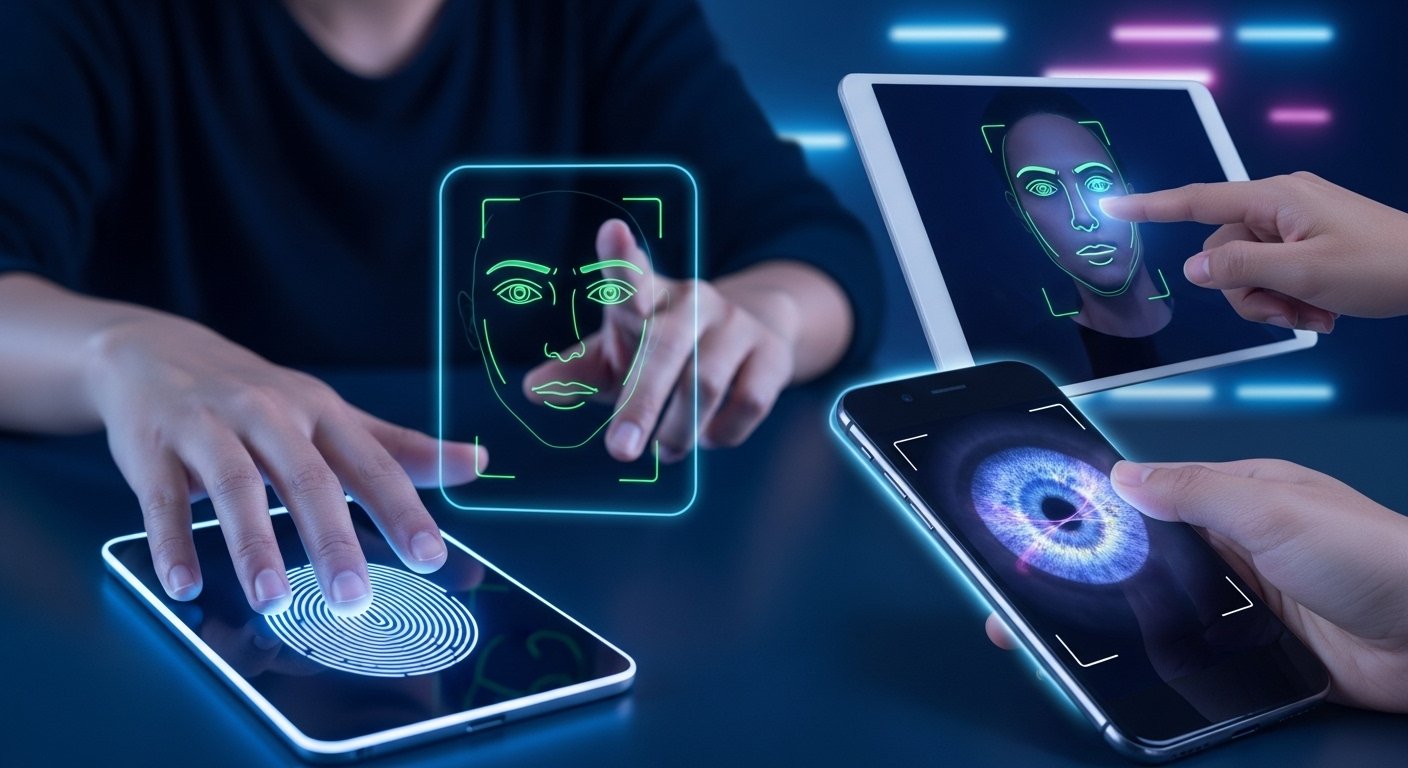
- A fingerprint scanner reads ridge patterns on your finger
- Facial recognition systems analyze facial structure and distance between features
- Iris scanners examine unique patterns in the eye
Types of Biometric Authentication
1. Fingerprint Recognition
Fingerprint scanning is one of the oldest and most widely used biometric methods. It is commonly found in smartphones, laptops, and security systems.
2. Facial Recognition
Facial recognition technology uses AI to map facial features and verify identity. It is used in smartphones, airports, and surveillance systems.
3. Iris and Retina Scanning
These systems analyze the unique patterns in a person’s eye. They are considered extremely accurate and secure.
4. Voice Recognition
Voice-based systems identify users based on tone, pitch, and speech patterns. It is commonly used in virtual assistants and customer service systems.
5. Behavioral Biometrics
This advanced method analyzes behavior such as typing speed, mouse movement, or walking pattern for identity verification.
https://play1.11winners.pro/biometric-authentication-the-future-password/
Advantages of Biometric Authentication
1. High Security
Biometric data is unique to every individual, making it extremely difficult for hackers to replicate or steal.
2. No Need to Remember Passwords
Users do not need to remember complex passwords or PINs, reducing the risk of forgotten credentials.
3. Fast and Convenient
Authentication takes only a few seconds, making it faster than traditional login methods.
4. Fraud Prevention
Biometric systems reduce identity theft and unauthorized access in banking, healthcare, and government systems.
5. Wide Applications
It is used in smartphones, airports, banking apps, office security systems, and online services.
Biometric Authentication in Everyday Life
Biometric technology is already widely used in daily life. Smartphones use fingerprint and facial recognition to unlock devices. Airports use biometric scans for passenger verification and immigration control. Banks use fingerprint or voice recognition for secure transactions.
Even social media platforms and online payment systems are integrating biometric login features to enhance user security.
Challenges of Biometric Security
Despite its advantages, biometric authentication also faces some challenges:
- Privacy concerns: Storing biometric data raises privacy issues
- Data breaches: If biometric databases are hacked, data cannot be changed like passwords
- High cost: Advanced biometric systems can be expensive to implement
- False matches: Sometimes systems may incorrectly accept or reject users
- Ethical concerns: Use of biometric surveillance raises ethical debates
Future of Biometric Authentication
The future of biometric authentication is expected to become even more advanced and secure. With the integration of artificial intelligence and machine learning, biometric systems will become more accurate and intelligent.
Future trends include:
- Multi-modal biometrics (using more than one biometric method together)
- Continuous authentication (verifying identity throughout usage)
- AI-powered fraud detection
- Contactless biometric systems
- Integration with blockchain for secure identity storage
In the coming years, passwords may become completely outdated, replaced by seamless biometric systems that offer both convenience and strong security.
Conclusion
Biometric authentication is revolutionizing the way we secure our digital lives. By using unique human characteristics, it provides a safer, faster, and more convenient alternative to traditional passwords. Although there are challenges related to privacy and data security, ongoing advancements in technology are making biometric systems more reliable and widely accepted. In the future, biometric authentication is expected to become the standard method of security, leading us toward a truly password-free digital world.