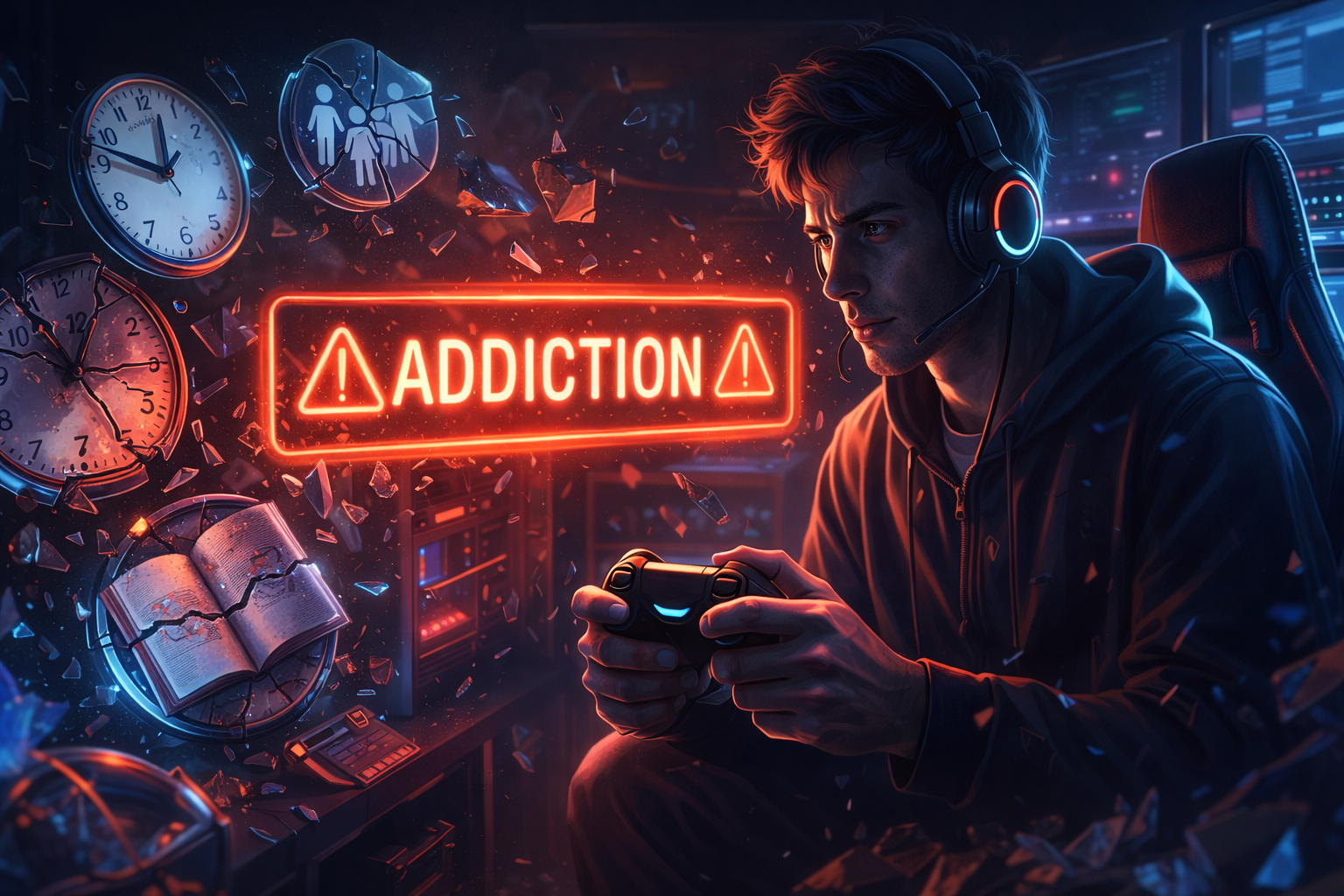
Gaming is one of the most popular hobbies in the world. It provides excitement, entertainment, and a way to connect with friends online. For many people, gaming is a healthy and enjoyable part of life. However, when gaming becomes excessive, it can cross the line into addiction. This is when a fun hobby turns into a serious problem that affects mental health, relationships, and daily life.
Gaming addiction is not just about playing too much. It is about losing control, ignoring responsibilities, and feeling unable to stop. The World Health Organization (WHO) even recognizes gaming disorder as a real condition. If you or someone you know is showing signs of gaming addiction, it’s important to recognize the warning signs early.
In this article, we will explore 9 dangerous signs of gaming addiction and how to identify them before it becomes too late.
1️⃣ You Constantly Think About Gaming
One of the first signs of gaming addiction is obsession. If gaming is always on your mind, even when you’re not playing, it could be a serious problem. You might constantly think about leveling up, winning battles, or planning your next gaming session.
Why it’s dangerous:
This kind of constant thinking can affect your focus at school, work, or daily life. When your mind is always on games, you lose productivity and may feel stressed or anxious when you are not playing.
2️⃣ You Ignore Responsibilities
Gaming addiction often leads to ignoring responsibilities. School, work, family, and social life may begin to suffer. You may miss deadlines, skip important tasks, or stop participating in family activities.
Why it’s dangerous:
Ignoring responsibilities can cause long-term damage to your life. It can lead to poor grades, job loss, and broken relationships.
https://play1.11winners.pro/gaming-addiction-9-dangerous-signs-you/
3️⃣ You Feel Irritated When You Can’t Play
When gaming becomes a priority, people may experience withdrawal symptoms when they cannot play. This includes feelings of anger, anxiety, and frustration.
Why it’s dangerous:
These emotional changes can affect your mental health and relationships. People may become aggressive or depressed when they are not playing.
4️⃣ You Lie About Your Gaming Time
A major sign of addiction is hiding the truth. If you start lying about how much time you spend gaming, it means you know your behavior is unhealthy.
Why it’s dangerous:
Lying breaks trust with family and friends. It also shows that the addiction is already affecting your social life.
5️⃣ You Lose Interest in Real-Life Activities
Gaming addiction can cause people to lose interest in real-world activities. Hobbies, sports, and social gatherings may become less exciting compared to gaming.
Why it’s dangerous:
This creates a cycle where the person becomes more isolated and relies on gaming for happiness.
6️⃣ You Sleep Less and Feel Exhausted
Gaming addiction often disrupts sleep patterns. People may stay up late gaming and wake up late, affecting their daily routine and health.
Why it’s dangerous:
Lack of sleep causes fatigue, mood swings, and health problems. It also reduces productivity and motivation.
7️⃣ You Spend Excessive Money on Games
Some gamers spend large amounts of money on in-game purchases, skins, or upgrades. This can lead to financial problems.
Why it’s dangerous:
Spending too much on games can cause debt, family arguments, and poor financial habits.
8️⃣ You Use Gaming to Escape Problems
Many people use gaming to avoid stress or emotional pain. When gaming becomes an escape, it can become dangerous.
Why it’s dangerous:
Avoiding real problems only makes them bigger. Over time, the person may stop dealing with important issues and rely on gaming for comfort.
9️⃣ Your Relationships Start to Break
Gaming addiction affects relationships with family, friends, and partners. People may feel ignored or neglected when someone is addicted to gaming.
Why it’s dangerous:
Broken relationships can lead to loneliness, depression, and mental health issues. It can also cause long-term emotional damage.
🔥 How to Prevent Gaming Addiction
Preventing gaming addiction is easier than recovering from it. Here are some tips:
✅ Set time limits
Use timers or alarms to control your gaming sessions.
✅ Balance gaming with real-life activities
Make sure you spend time with family, friends, and hobbies.
✅ Take breaks
Take breaks during long gaming sessions to reduce stress and fatigue.
✅ Talk to someone
If you feel addicted, talk to a friend, family member, or professional.
✅ Use parental controls
For children, parents should use gaming controls and monitor playtime.
🔥 When to Seek Professional Help
If you or someone you know shows 5 or more of these signs, it’s time to seek help. Gaming addiction can be treated with therapy, counseling, and support groups. Mental health professionals can provide guidance and strategies to regain control.
🌟 Final Thoughts
Gaming is fun and can be beneficial, but it becomes dangerous when it controls your life. The key is balance. Games should be a source of entertainment, not escape. Recognizing the signs early can prevent serious consequences and help you regain control of your life.
Remember, gaming is meant to be fun — not harmful.